
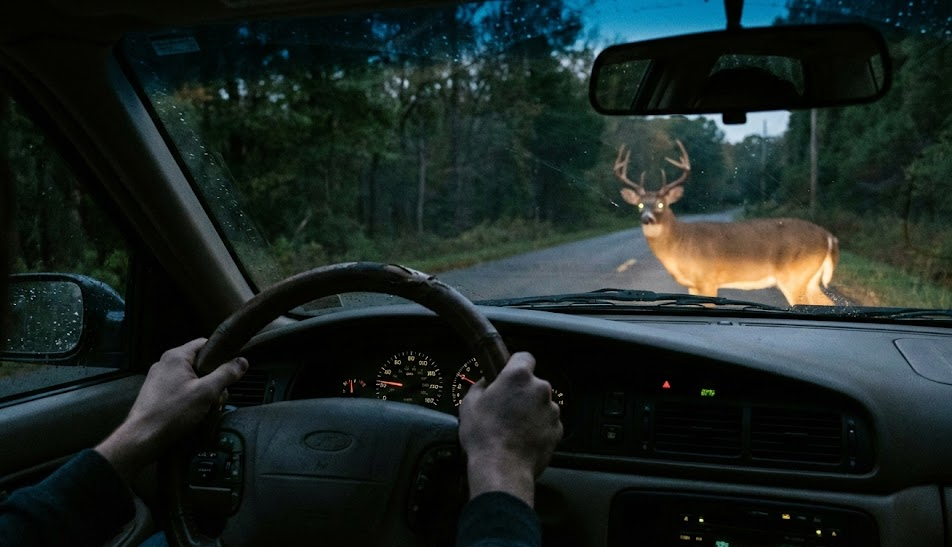
Every November, something dramatically changes on Putnam County’s roads. It’s not just the cooler weather or the shorter days—it’s the biological urgency of Tennessee’s whitetail deer population during their peak breeding season. This period, known as “The Rut,” transforms normally cautious deer into unpredictable road hazards, and nowhere is this more evident than along Cookeville’s busy corridors like Highway 111. When a mature buck chases a doe across four lanes of traffic at dusk, your reaction time alone won’t save you. What will save you is a comprehensive brake system inspection that ensures your Nissan can stop exactly when you need it to, without hesitation or delay.
The Biology of Danger: Understanding The “Rut” in Putnam County
Late autumn isn’t simply “fall” for Tennessee’s whitetail deer—it’s the biological imperative that drives their entire year. The Rut is the breeding season when bucks become intensely focused on finding receptive does, and during this time, their normal survival instincts effectively shut down. Tennessee deer biologists consistently report that the peak of this activity happens from mid-November through December, representing the highest concentration of breeding activity in central Tennessee counties like Putnam. During these critical weeks, mature bucks that normally stay hidden in thick cover suddenly appear on roadways at all hours, chasing does with complete disregard for traffic.
This year, the situation is even more complicated with Tennessee’s gun season having opened November 22. This timing pushes additional pressure onto deer populations right as the Rut remains active, forcing animals out of their traditional bedding areas and onto roads they’d typically avoid. For Cookeville drivers, this creates a perfect storm of danger. Tennessee Highway Patrol reports consistently show that this season is the worst for deer-related crashes statewide, with thousands of deer-vehicle collisions happening across Tennessee annually—hundreds of those resulted in injuries. The reality is stark: when deer movement peaks in Putnam County, your brakes become your most important safety feature.
Highway 111 & The “Freeze” Response: Why Reaction Time Isn’t Enough
Highway 111 runs through Cookeville as a high-speed corridor where traffic regularly moves at 55-65 mph, and this creates a serious mathematical problem during deer season. Even if you spot a deer the instant it enters the roadway and your reaction time is perfect, physics still demands stopping distance. At 60 mph, your vehicle is covering 88 feet every single second. By the time your brain processes “deer,” your foot moves to the brake pedal, and the brake system engages, you’ve already traveled a significant distance—and that’s before your vehicle even begins to slow down.
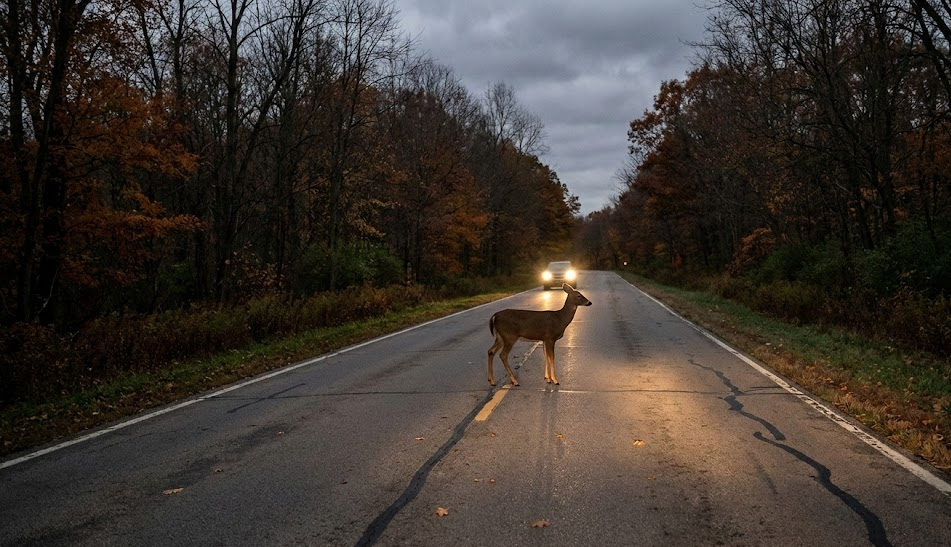
Here’s where brake condition becomes absolutely critical. If your brake pads have worn thin, if your rotors have developed grooves or hot spots, or if your brake fluid has absorbed moisture over time, your actual stopping distance increases dramatically beyond what the manufacturer intended. What should have been a hard stop that leaves you two feet from impact becomes a collision at 30 mph—enough force to total your vehicle and potentially injure everyone inside. Deer also exhibit what wildlife biologists call the “freeze response” when caught in headlights, meaning they often stop directly in your path rather than continuing across the road. This gives you zero margin for error and makes every foot of stopping distance count. The factory-trained Nissan technicians at Nissan of Cookeville understand exactly how these systems work together and can identify problems before they cost you a safe stop.
Why Your Nissan’s Safety Systems Rely on OEM Brake Parts
If you’re driving a newer Nissan model—anything from the past few years—there’s something important you need to understand about how your safety systems actually function. Features like Automatic Emergency Braking (AEB) and Forward Collision Warning use cameras and radar sensors to monitor the road ahead, calculating stopping distances in milliseconds. But here’s the critical part: these computer systems are calibrated to factory specifications. They assume your brake pads have the exact friction coefficient, thickness, and heat dissipation characteristics that Nissan engineers designed into the system.
When you install aftermarket brake pads—even high-quality ones—you’re fundamentally changing the equation these safety computers are using. The system still sees the deer and signals an emergency stop, but the actual brake performance no longer matches what the computer expects. This desynchronization can mean the difference between a controlled stop and a collision, especially in that critical moment when a whitetail buck bolts across Highway 111 at twilight. Genuine Nissan OEM brake parts maintain the precise engineering tolerances your vehicle’s safety systems depend on, ensuring that when AEB activates or when you slam the brakes yourself, the stopping power matches exactly what those systems calculated you’d need. That consistency could genuinely save your life during Cookeville’s dangerous deer season.
Beyond the Pads: Rotors, Fluid, and the Cold Weather Factor
Most drivers think about brake maintenance as simply replacing pads when they wear down, but your brake system is considerably more complex—and winter weather in Cookeville exposes every weakness. Brake rotors, the metal discs your pads clamp against, develop microscopic cracks and grooves from repeated heat cycling. When rotors are damaged, they can’t dissipate heat properly, which means your brake pads overheat and lose friction right when you need maximum stopping power. If you’ve noticed any pulsing sensation through your brake pedal when stopping, that’s warped rotors telling you they need attention before you face an emergency stop for a deer.
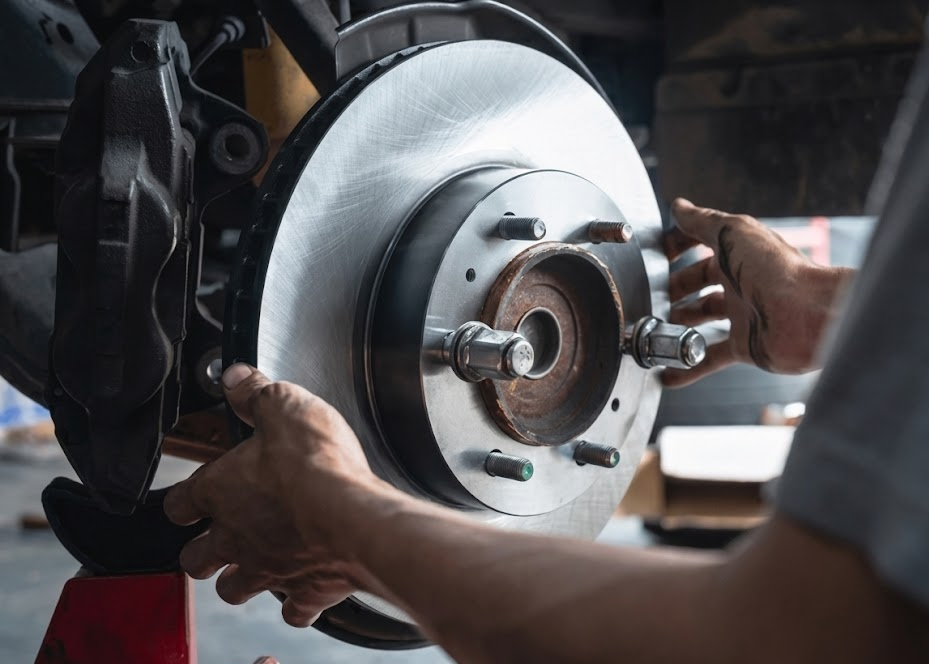
Brake fluid presents an even less obvious danger. This hydraulic fluid is hygroscopic, meaning it naturally absorbs moisture from the air over time. As water content increases in your brake fluid, two problems develop: first, the fluid’s boiling point drops, which can cause brake fade during hard stops; second, moisture promotes internal corrosion in brake lines and calipers. Winter mornings in Cookeville regularly bring frost and temperatures in the low 30s, and cold brake fluid with high moisture content doesn’t flow as freely through the system. This reduces hydraulic pressure right when you need instant response.
The comprehensive brake inspection at Nissan of Cookeville checks all these components—measuring pad thickness, inspecting rotor surfaces for scoring or warping, testing brake fluid moisture content, and examining calipers for even operation. This complete approach identifies problems before they compromise your safety, ensuring that when you encounter a deer on a cold morning, every component of your brake system responds exactly as designed.
Beat the Rush: Schedule Your Inspection Before Holiday Travel
The holiday season creates additional urgency around brake safety in Cookeville. Not only does it fall right in the middle of active deer movement, but it’s also when traffic volume on Highway 111 and surrounding Putnam County roads increases significantly as families travel to gatherings. More vehicles mean less room to maneuver, shorter following distances, and reduced reaction time if the car ahead of you suddenly brakes for a deer. Add in the possibility of a few family members riding with you—grandparents, kids, relatives visiting from out of town—and the stakes get even higher.

Getting your brakes inspected before the holiday rush gives you peace of mind that your vehicle is genuinely ready for these demanding conditions. If technicians discover your pads are getting thin or your brake fluid needs flushing, you’ll have time to address these issues without the stress of last-minute appointments or rushed service. The Nissan Express Service at Nissan of Cookeville makes this easy, with dedicated bays specifically for quick inspections and routine brake service so you’re not waiting hours when you need a fast turnaround. Plus, you’ll avoid the scenario where you’re loading up the car for family visits, only to discover your brakes are making a grinding noise that you’ve been ignoring for weeks.
What Makes Late-Season Deer Activity So Dangerous in Putnam County
Understanding why this time of year is so particularly hazardous for Cookeville drivers comes down to several converging factors that make deer behavior genuinely unpredictable. Here’s what you’re actually dealing with on local roads:
- Biological Drive Overrides Caution: During the Rut, mature bucks are literally driven by hormones and will chase does across any terrain—including busy highways—without the slightest awareness of danger. Their normal wariness around humans and vehicles completely disappears, making their movements impossible to predict.
- Dawn and Dusk Commute Times: Deer are crepuscular animals, meaning they’re most active during the twilight hours of dawn and dusk. These times unfortunately coincide perfectly with Cookeville’s morning and evening commutes, when Highway 111, Highway 70, and other major roads are busiest with traffic heading to work or returning home.
- Hunting Pressure Increases Movement: Tennessee’s active gun season pushes deer out of their normal bedding areas and into unfamiliar territory, including roadways they’d typically avoid. This displacement makes deer movement less predictable and increases the chance they’ll cross roads at unexpected times and locations.
- Herd Behavior Multiplies Risk: Deer travel in groups, especially does with their yearling offspring. If you see one deer cross the road, there are very likely two or three more immediately behind it. Many collisions happen when drivers successfully avoid the first deer only to hit the second or third one following closely behind.
- Limited Visibility on Rural Roads: Many of Putnam County’s roads run through wooded areas where trees and vegetation come right up to the roadway edge. This drastically reduces your ability to see deer before they’re already in your lane, giving you almost no time to react even if your brakes are in perfect condition.
These factors combine to make this season genuinely the most dangerous time for Cookeville drivers, and the only reliable defense is ensuring your vehicle’s brake system can deliver maximum stopping power the instant you need it.
How Nissan of Cookeville’s Brake Inspection Protects You
When you bring your Nissan to Nissan of Cookeville for a brake inspection, you’re getting considerably more than a quick visual check. The factory-trained technicians follow a comprehensive inspection protocol that examines every component affecting your vehicle’s stopping power. They start by measuring brake pad thickness on all four wheels, checking not just total wear but also whether the pads are wearing evenly—uneven wear indicates problems with calipers or slides that need immediate attention.
Next, they’ll inspect your brake rotors, looking for scoring, grooves, hot spots, or warping that reduces braking effectiveness. Rotors that look fine to the untrained eye might have developed internal stress cracks or heat damage that shows up under professional measurement. The technicians also test your brake fluid, checking both the moisture content and the overall condition to determine if a flush is needed. They’ll examine brake lines for corrosion, leaks, or damage, and they’ll check that all calipers are operating smoothly and applying even pressure.
What really sets this inspection apart is that Nissan technicians know your specific model inside and out—they understand exactly what brake specifications your Altima, Rogue, or Pathfinder needs, and they can spot problems that generic shops might miss. If your vehicle has advanced safety features like AEB or Hill Start Assist, they’ll verify these systems are calibrated correctly and functioning as designed. This thorough approach catches issues before they become dangerous, giving you the confidence that your brakes will respond exactly as needed when a deer suddenly appears on Highway 111 this season.
Real-World Brake Performance: What the Numbers Mean
| Condition | Speed (MPH) | Braking Distance (After Reaction) | Extra Distance with Worn Brakes (feet) | Impact on Deer Collision |
|---|---|---|---|---|
| New Brake Pads | 55 | 175 | 0 | Baseline stopping performance |
| Glazed or Low-Quality Pads | 55 | 190-200 | 15-25 | May not stop in time for sudden deer |
| Worn Pads + Old Fluid | 55 | 210-230 | 35-55 | High collision risk, reduced control |
| New Brake Pads | 65 | 235 | 0 | Baseline for highway speeds |
| Worn Pads + Warped Rotors | 65 | 270-290 | 35-55 | Almost impossible to avoid collision |
Note: Braking distances vary by vehicle weight, road conditions, and brake system condition. These estimates illustrate how worn components increase stopping distance beyond manufacturer specifications.
Why Genuine Nissan Parts Make the Difference
There’s genuine temptation to save money by choosing aftermarket brake parts, especially when you’re just trying to get through a routine maintenance visit. But during deer season in Cookeville, when activity peaks and every foot of stopping distance potentially matters, using genuine Nissan OEM parts becomes less about brand loyalty and more about actual safety. Nissan engineers spend thousands of hours developing brake systems specifically for your vehicle’s weight, suspension geometry, and safety system integration. Every pad formulation, every rotor metallurgy choice, and every specification exists for a reason.
Genuine Nissan brake pads use friction materials formulated to maintain consistent stopping power across a wide temperature range—from cold Cookeville mornings when you’re heading to work to repeated hard stops in traffic. The pad backing plates are designed to eliminate noise and vibration while ensuring even pressure distribution across the rotor surface. The rotors themselves are cast to exact thickness specifications and balanced to prevent the pulsing sensation that indicates warping. When these components work together as Nissan intended, your brake system delivers predictable, reliable stopping power every single time you press the pedal.
Perhaps most importantly, genuine Nissan parts maintain your vehicle’s warranty coverage and ensure that your safety systems continue functioning as designed. When you schedule service at Nissan of Cookeville, you’re not just getting parts—you’re getting the peace of mind that comes from knowing your brake system is exactly what Nissan engineers intended for your vehicle.
Frequently Asked Questions
Q: When is the peak time for deer accidents in Cookeville, TN?
A: The peak time for deer-related collisions in Cookeville runs from mid-November through December when Tennessee’s whitetail rut is active. This timing coincides with the biological breeding season when bucks become extremely aggressive and unpredictable. The danger extends through early winter as hunting pressure from gun season pushes deer onto roads they’d normally avoid.
Q: Does my Nissan’s Automatic Emergency Braking work with worn brakes?
A: While the sensors and computer systems in your Nissan’s AEB continue to function with worn brakes, the physical stopping distance increases significantly when pads are thin or rotors are damaged. Your AEB system calculates stopping distance based on factory brake specifications, so worn components mean the vehicle can’t stop as quickly as the system expects. This creates a dangerous gap between what the computer thinks will happen and what actually occurs.
Q: Why do my brakes squeak on cold mornings?
A: Light squeaking on cold mornings is often just surface moisture on the rotors and typically disappears after a few brake applications. However, a constant high-pitched squeal means your brake pads have worn down to the built-in wear indicators—thin metal tabs designed to alert you that the pads need immediate replacement. If you’re hearing this squeal regularly, especially during braking, schedule an inspection right away before you risk rotor damage or brake failure.
Q: How often should I have my brake fluid checked?
A: Nissan recommends checking brake fluid at least annually, but it’s especially important to have it tested before winter and deer season in Cookeville. Brake fluid naturally absorbs moisture over time, and this moisture lowers the boiling point while promoting internal corrosion. Before demanding driving conditions, having your brake fluid tested ensures you have maximum hydraulic response when you need to make an emergency stop for a deer.
Schedule Your Nissan Brake Inspection Today
Don’t let dangerous deer activity catch you with brakes that aren’t ready for emergency stops. The factory-trained experts at Nissan of Cookeville are here to ensure your brake system delivers the reliable stopping power you need on Highway 111 and throughout Putnam County, whether you drive a brand-new Nissan Rogue or a trusted Altima that’s been serving you reliably for years. We have the right diagnostic tools, genuine Nissan parts, and specialized knowledge to handle any brake issue efficiently and effectively.
With Cookeville’s deer activity remaining high and the Rut creating genuinely unpredictable road hazards, waiting to address brake concerns only makes the situation worse and potentially more expensive to fix. Our comprehensive inspection approach identifies exactly what your system needs, ensuring you get appropriate service that solves problems rather than temporary fixes that fail when you need stopping power most. Plus, our convenient Nissan Express Service makes getting your brakes checked fast and easy, with dedicated bays so you’re not waiting hours for a thorough inspection.
Click here to schedule your brake inspection and drive Highway 111 with confidence this season!
Or visit us at 501 Neal St., Cookeville, TN 38501, and let our certified technicians ensure your brakes are ready for Tennessee’s demanding deer season.